Beginner Tips, Mistakes and Projects

A starter kit for anyone picking up a camera seriously. It gathers the mistakes most beginners make and how to avoid them, the advice worth ignoring, and small habits such as setting the viewfinder diopter correctly. Composition lessons teach how to see a picture before taking it, and a run of at-home projects, from easy macro to a first timelapse, gives the ideas something to practise on.
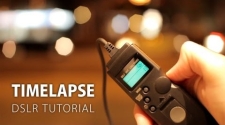

DSLR Tutorial: How to Make a Timelapse

Fenchel & Janisch explain two DSLR timelapse methods. The quick method records video manually at 1/30 to 1/50 shutter and f/4 to f/8 for five-plus minutes, then speeds it up. The professional method shoots stills with an intervalometer, allowing 50-second exposures at f/8, ISO 100, for night motion blur.

How to Take Amazing Photos: 7 Simple and Powerful Photography Tips

Joshua Cripps condenses photography into seven principles for any camera: fill the frame and ditch clutter, simplify and exaggerate via colour or scale, use rule-of-thirds placement, build near-far depth with wide angles, connect elements with leading lines, shoot from unusual heights, and favour sunrise, sunset or shade over midday.

10 Common Mistakes for Beginner Photographers: Principles

Christian Tudor lists ten mistakes holding beginners back: believing photography is complicated, fearing others' opinions, thinking expensive gear is essential, giving up before ten thousand frames, photographing nearby objects instead of seeking stories, assuming professionals never miss, misjudging harsh sunlight, believing in talent, fixating on equipment and hoarding work.

How to Adjust Your Camera Viewfinder Dioptre

Paul from Photo Genius favours the viewfinder over live view: it stays visible in sunshine, holding it to the eye with elbows tucked reduces shake, and saves battery. He turns the dioptre dial beside the eyepiece until the viewfinder numbers look sharp, half-pressing the shutter to wake the camera.

The Secret to Cinematic Photos

Rubidium Wu of Crimson Engine identifies traits that make a photograph feel like a film frame: low-key skin tones kept under fifty per cent, non-naturalistic colour grading like teal and orange, subjects immersed in a real environment with out-of-focus foreground and background, and light motivated by a visible source.

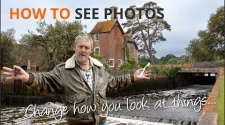
How to See Photos and Compositions

Mike Browne applies Einstein's line, that changing how you look at things changes them, to photographers who master exposure yet struggle to see pictures. He turns a no-parking sign on a white gate and an unremarkable house into pictures by moving, exploring angles and waiting for the decisive moment.

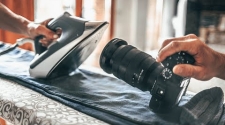
10 Photography Ideas at Home

Jordi Koalitic presents ten creative photography ideas to shoot at home during quarantine. Without narration, the four-minute piece evidently shows each setup and its resulting image in quick succession, using everyday household objects and simple tricks, with the gear listed as a Sony A7R III and 16-35mm lens.

10 Beginner Photography Mistakes and How to Take Better Photos

Paul from Photo Genius runs through ten mistakes beginners make: leaving image stabilisation on when the camera sits on a tripod, pushing ISO so high that noise appears (he defaults to 200), shooting from eye level instead of getting low, and getting closer than a lens's minimum focusing distance.

10 Photoshoot Ideas That Are Easy to Try at Home

Karl Taylor suggests ten shoots to practise indoors: window-lit natural light portraits, photographing children with toys as props, a one-light setup simulating sunlight, single-light rim lighting, natural light food, still life, one-light product photography with reflectors and flags, a bottle shot using daylight and a phone torch, and splash photography.

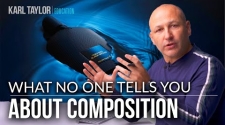
The Most Important Composition Rule That Nobody Tells You

Karl Taylor's overriding compositional rule is keeping the viewer inside the picture, since an image succeeds only while it holds attention. Laying an acetate grid over his photographs, he shows how the rule of thirds, central symmetry with leading lines, complementary colour contrast and framing serve that aim.