Boudoir: Posing and Shooting

Boudoir photography lives on trust, flattering light and a flow of poses that keeps the session moving. Michael Sasser's quick-start tips open this set, followed by flow-posing sequences on the bed and chair from The Photographer Academy and CreativeLive. Lens choice, natural light, atmospheric lighting for lingerie and deliberately unusual ISO settings round out the technical side of the genre.
Boudoir Photography: Flow Posing

Jen Rozenbaum demonstrates her rotisserie chicken flow-posing method on a model, starting her face down and diagonal on the bed, then rotating her onto each side and her back for a run of flattering shots. She covers honest wardrobe choices, giving the hands a robe, and asking before touching.

What Is the Best Boudoir Lens?

Michael Sasser compares his three boudoir lenses on a Sony A9: 35mm f/1.4, 50mm f/1.4 and 85mm f/1.8. The 35mm suits small hotel rooms but distorts up close, the 85mm compresses backgrounds and suits headshots, while the 50mm, used for almost all his work, keeps attention on the person.

Glamour vs Boudoir: What Should You Shoot?

Michael Sasser distinguishes glamour photography, shooting models in erotic but not pornographic images where the less experienced party usually pays, from boudoir, his livelihood: paid sessions for everyday women aged 18 to 61 seeking confidence after weddings, divorce or injury. He uses models only for YouTube trade shoots.

Three Favourite Boudoir Poses and Course Update

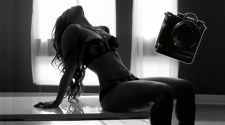
Michael Sasser demonstrates with model Johanna three poses clients buy most: a couch pose, one knee down, elbows planted, far leg long, back arched, fingertips in hair; a slow criss-cross walk letting a robe slide to the wrists; and a backlit silhouette, hips on the wall, arms sliding up.

How to Use Natural Light for Boudoir Portrait Photography: 3 Tips

Michael Sasser shares three tips for lighting boudoir portraits with natural light, arguing that photographers who focus on posing often neglect the light that makes images look professional. Working with a model beside a window, he covers softening it with sheer curtains and lighting from the front or behind.

Why I Shoot at Unusual ISOs for Boudoir

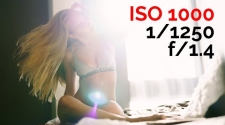
Michael Sasser explains why he shoots boudoir sessions at ISO 400, not 100: it leaves shutter headroom between 1/200 and 1/8000 second under passing clouds, so he adjusts one setting and concentrates on the client. Noise, he argues, resembles film grain, yields to Lightroom's masked sharpening, and clients never notice.

How to Learn Boudoir Photography Fast: 8 Tips

Michael Sasser offers eight habits for improving boudoir, or any, photography faster: shoot more, past the first ten thousand frames, ignoring excuses about space or light; watch tutorials without getting stuck; share work in Facebook groups to attract subjects; and borrow single elements from inspiring images instead of copying.

Top Five Boudoir Poses

Yuliya Panchenko demonstrates five furniture-free boudoir poses with model Janine, built on triangles and hourglass curves: standing at a wall, legs crossed, hip popped, arms raised; hugging herself a step forward; seated, toes pointed; lying back, spine arched, hands in hair; and side-lying, legs extended, chin and arm separated.

How to Get Variety in Your Boudoir Photos

Michael Sasser demonstrates with a model six ways to add variety to a boudoir session without new poses: switching front light and backlight, framing from wide to tight details, serious and laughing expressions, shooting from the floor or a chair, subtle pose tweaks and movement like a hair toss.

Top Boudoir Poses: Flow Posing on the Chair

Mark Cleghorn works through four boudoir chair poses with model Kelsey, lit by a gridded Elinchrom softbox and a Lastolite light faking a window, at f/4 in mono. He starts soft, on the chair edge on tiptoe, then opens the legs and leans forward for a raunchier sixties feel.