Choosing a Camera and Gear

Buying advice without the hype. This collection weighs DSLR against mirrorless and full frame against crop sensor, and asks when an upgrade is worth the money. Working photographers list what a beginner needs and what to leave on the shelf, a budget-gear shootout tests cheap kit against expensive, and two challenges hand professionals cheap cameras to show how much of a good picture is the photographer rather than the gear.
Lens Hoods: Why, When and How to Use Them

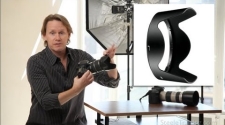
Phil Steele explains a lens hood shades the front element from stray light, removing flare and restoring blacks and saturation, as before-and-after Arizona shack shots show, and doubles as a bumper against knocks. He keeps it on indoors and at night, shooting events with caps off and hoods on.

Lara Jade: Cheap Camera Challenge

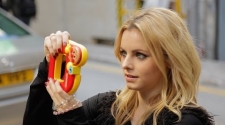
Fashion photographer Lara Jade is handed a 0.3-megapixel talking Red Superman toy camera by DigitalRev TV during a six-hour Hong Kong layover and must produce six image styles from three outfits. With no exposure control, a tiny screen and three-second shutter lag, she matches locations to each dress.

Crop Factor Truth: Do You Need Full Frame?

Tony Northrup photographs his father with a 50mm f/1.8 on full frame, APS-C and Micro Four Thirds bodies, showing smaller sensors crop the view but not exposure. He multiplies focal length and aperture by crop factor (1.5, 1.6 or 2) for full-frame equivalents, arguing equivalent lenses are similar sizes.

Is a Good Camera Important? Pro vs Amateur Challenge

Linus Sebastian, a novice armed with a 51-megapixel Fujifilm GFX 50R medium format, takes on professional photographer Brandon shooting only a Google Pixel 3 across five challenges, from a racetrack action shot judged on speed, contrast and clarity to intimate pregnancy photos, testing whether skill or gear matters more.

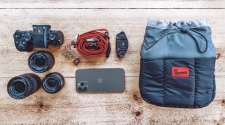
What's in My Camera Bag 2019

Paul from Photo Genius empties his ten-year-old Think Tank Airport Essentials backpack, praising its comfort, carry-on size and side handle. Inside are a new Nikon Z6 with 24-70mm, a 70-200mm f/2.8 for his children's sport, a D3500 with 35mm f/1.8, spare SD cards, batteries, remotes and mini tripod.

Photography Gear You Shouldn't Buy

James Popsys talks beginners out of accessories he is often asked about: filters, especially graduated ones whose effect Lightroom replicates free, drones, expensive carbon-fibre tripods bought before knowing they will be used, Gnarbox and SSDs, cleaning kits, monitor calibrators, Loupedeck controllers and L brackets, invoking diminishing returns.

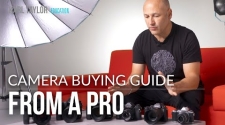
What Camera Should You Buy: DSLR, Mirrorless, Medium Format, Full Frame or Crop Sensor?

Karl Taylor sets out what to weigh before buying a camera: define purpose, since landscape work values tonal range over frame rate. He compares full frame, APS-C and medium format sensors, explains why larger photosites beat cramped smartphone pixels, stresses lens quality over megapixels, and contrasts DSLRs with mirrorless.

Stuff Beginner Photographers Actually Need

James Popsys lists kit worth buying when starting out: a camera covering several focal lengths, not necessarily interchangeable-lens, a standard prime like a nifty fifty (25mm on Micro Four Thirds), an affordable telephoto rather than the priciest option, and a cheap, accessible bag so the camera gets used.

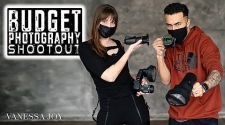
Budget Photography Gear Shootout with Manny Ortiz

Vanessa Joy and Manny Ortiz photograph a model with budget kit: Ortiz with a Sony a6400, Tamron 17-70mm f/2.8, Flashpoint R2 and Xplor 100 and MagMod gobos for hard, patterned light; Joy on a Canon M50 Mark II and EF-M 50-200mm f/4.5-6.3, near f/8 with EL-100 and 470EX-AI speedlites.

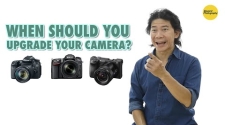
When Should You Upgrade Your Camera?

Andrew Boey, who has taught photography for more than twenty years, discusses when a photographer should upgrade a camera body. The seventeen-minute Beyond Photography talk evidently weighs the arguments for and against replacing working equipment, the kind of practical gear-buying question he returns to across his tutorials and courses.