Exposure Basics: Shutter Speed, ISO and Manual

Shutter speed freezes a moment or lets it blur; ISO sets how far the sensor can be pushed before noise creeps in. These ten lessons explain shutter speed and shutter priority, show slow shutters at work on waterfalls, seascapes and moving subjects, make sense of auto ISO, and bring aperture, shutter and ISO together so that manual mode becomes a set of deliberate choices rather than guesswork.

Camera Settings: Shutter Priority, When to Use It and Why

Bob from Litegenius reviews the exposure triangle and semi-automatic modes before explaining why he prefers shutter priority when unsure what the next shot will be. It lets him cap ISO and set a shutter speed that eliminates camera and subject movement, and he warns to check the histogram early.

How to Pick the Best Aperture, Shutter Speed and ISO Settings

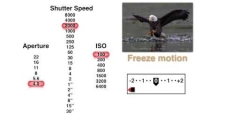
John Greengo asks a CreativeLive audience to choose settings for a bald eagle landing on Alaskan water. From ISO 100 for quality, they pick 1/2000 second to freeze the action and f/4 for shallow depth, then, when the meter shows two stops under, conclude only ISO can be raised.

All About Auto ISO (Nikon Cameras)

Steve Perry explains how auto ISO holds a set shutter speed as a bird moves between shade and sun, then steps through a D850's ISO sensitivity menu: base ISO, maximum sensitivity and minimum shutter speed. He covers aperture priority, shutter priority and manual, and why over-fast minimums cause noise.

A Complete Guide to Exposure in Photography (Part 1)

Andrew Boey traces light detection from chemical plates and ISO 100 to 400 films to digital sensors, introducing the three exposure controls: aperture, shutter speed and ISO. He compares 1/4000 with half-second shutter speeds, explains balancing the three as a sum, and shows the viewfinder meter centred on mid-tone.

Camera Settings I Use: 7 Example Images and Settings Explained

Paul from Photo Genius explains the settings behind seven photographs and dials them in on Nikon and Canon DSLRs: lightning over Brisbane on a tripod at ISO 200, f/9 and 20 seconds, a panned cyclist at 1/5 second in shutter priority, and blurred waves at Coolangatta before dawn.

The Best Shutter Speed for Waterfall and Seascape Photography

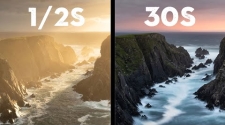
Mark Denney, after an Acadia National Park workshop, argues shutter speed shapes the story of moving water, comparing slow exposures from two seconds to minutes that turn water silky, faster speeds that freeze detail, and preferred blended speeds that keep texture while showing motion, with Acadia and Maui examples.

This One Setting Can Make or Break a Photo: On Location in Ireland

Nigel Danson explores the coast of Northern Ireland and Ireland ahead of a storm, photographing the basalt columns of the Giant's Causeway from above and below, backlit waves breaking between headlands and dramatic light at Malin Head, while showing how shutter speed decides whether a seascape works, mistakes included.

Slow Shutter Speed Secrets: Capturing Motion

Karl Taylor dissects a film-era photograph of a speedboat at sunset, shot from a second boat at 30 knots with a super-wide lens. A filter holds the sky's exposure, a counterintuitive 1/15 second shutter streaks spray and wake, and an on-camera Canon speedlight provides fill flash, keeping passengers crisp.

Shutter Speed Explained: Camera Basics for Beginners

Paul from Photo Genius likens the shutter to a door whose open time controls the light recorded, and explains why its range makes it the handiest exposure control. He reads shutter speeds on the LCD from one second to fractions, shows how to change them, then explores motion effects.

Photographic Exposure: The Complete Guide (Part 1, Introduction)

John Greengo opens his twelve-part exposure course by defining exposure as light reaching the sensor, recorded through shutter speed, aperture and ISO, and previews the sections and PDF notes. It covers in-camera file processing: colour space, white balance, size options and JPEG compression artefacts, and why photographers shoot raw.