Home Studio Essentials

A working studio fits into a spare room. Gavin Hoey's Home Studio Essentials series takes a small space through lighting, modifiers, backgrounds and processing, one practical episode at a time, and is joined here by a guide to the only gear a home studio truly needs, six tips for working in cramped rooms, and five portrait ideas that can be shot in any house with what is already there.
Home Studio Essentials Part 4: Reflectors

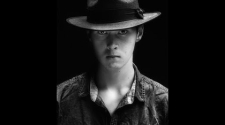
Gavin Hoey calls the 5-in-1 reflector his key home-studio tool, with silver, gold, white, translucent and black flag surfaces. Lighting Dan with one StreakLight 360 at 90 degrees, he flags the white wall, adds silver on a boom beneath his face to light the eyes, re-metering for f/8.

Home Studio Essentials Part 5: Adding a Second Light

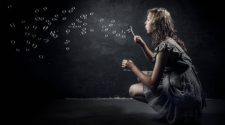
Gavin Hoey adds a second flash, a StreakLight 180, as hair and separation light above Freya, who blows bubbles in profile. He meters f/8 on the face against f/4 on the hair, tests the two-stop gap, then in Photoshop composites extra bubbles from a bubble machine shot on black.

Home Studio Essentials Part 6: Grids

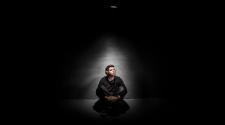
Gavin Hoey demonstrates honeycomb grids on his StreakLight 360, comparing a bare reflector's wide spread with a grid's tight pool and rapid fall-off. He photographs grime artist Iffy on the floor under a gridded key light for a street-lamp feel, adds a second gridded light and edits in Camera Raw.

Home Studio Essentials Part 7: Coloured Gels on a Grey Background

Gavin Hoey turns a plain dark grey backdrop into almost any colour with a gelled background flash in his small home studio. Unlit grey records as black; red and yellow gels stack to make orange, the Streaklight remote sets intensity, and Camera Raw's HSL panel fine-tunes hue and saturation afterwards.

Home Studio Essentials Part 8: Pure White Backgrounds

Gavin Hoey explains why a white backdrop photographs grey under a single key light, using the inverse square law and meter readings at f/8, then adds a second flash behind the model, metered about a stop brighter at f/11, for pure white. In Photoshop the polygonal lasso extends the background.

Home Studio Essentials Part 9: A Softbox as a White Background

Gavin Hoey turns his largest softbox, on a RoveLight 600, into a pure white background for head and shoulders portraits in a small home studio, with a StreakLight 360 as key. Meter readings confirm the softbox is a stop brighter than the f/11 key without spilling onto the model's hair.

Home Studio Essentials Part 10: Separation from a Dark Background

Gavin Hoey shows three ways to stop a model merging into a dark grey backdrop. After metering a single key light at f/5.6, he adds a second StreakLight as a hair light, repositions it to illuminate the background instead, then angles one light to catch both subject and backdrop.

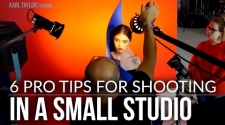
6 Professional Tips for Shooting in a Small Photography Studio

Karl Taylor offers six tips for small studios: understand physics, since lights close to the subject bounce less; paint walls dark grey or black; use flags against spill; organise gear on trolleys and hooks; save floor space with ceiling tracks, booms and wall-hung backgrounds; and rent space when needed.

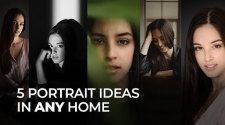
5 Portrait Ideas You Can Do in Any Home

Pye Jirsa builds five portrait setups at home with a Sony A7C and Samyang 35mm, 45mm and 75mm f/1.8 lenses. The open door becomes a flat light source, the model moves to balance concrete bounce fill, a hand-painted backdrop adds Rembrandt-style directional light, and a phone torch lights one setup.

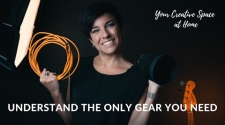
The Most Affordable Home Photography Studio: The Only Gear You Need

Laura BC, who builds a studio in every London flat she rents, lists minimum gear for an affordable home studio for portrait, fashion, product and self-portraits. She weighs flash against continuous light, recommending a Neewer flash and a similarly priced Godox LED with remote control, and covers softbox sizes.