Lenses for Portraits and Telephoto

Which lens flatters a face, and why do so many professionals reach for a telephoto? These eight tutorials explain how focal length changes facial proportions and background rendering, compare the classic portrait primes, and make the case for the 70-200mm: compressing backgrounds, isolating subjects outdoors and, less obviously, working at long focal lengths inside a small studio where space is tight.

Prime Lens Challenge Part 2

Gavin Hoey accepts Mark Wallace's challenge to shoot a day with one prime, swapping his 12-40mm for an Olympus 12mm f/2 (24mm equivalent) around Brighton. He revives hyperfocal focusing at f/11, uses the silent shutter for street shots, enjoys its lightness, and tests f/2 at the pier at dusk.

Understanding Portrait Lenses Part 1

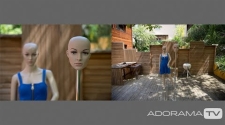
Mark Wallace opens a two-part guide to portrait lenses, contrasting wide street lenses with long studio lenses. He quantifies field of view (82 degrees at 21mm, 10 at 200mm), uses mannequins to show distance, not focal length, enlarges near objects, and compares a coffee creamer across lenses and apertures.

Understanding Portrait Lenses Part 2

Mark Wallace, with Natasha in a cramped studio, uses a Canon 5D and 24-105mm to debunk the myth wide angles distort faces: cropped 24mm and telephoto shots from one spot match, while filling the frame at 24mm enlarges her outstretched hand, so he advises stepping back and zooming in.

How to Control Your Background with a 70-200mm Telephoto Lens

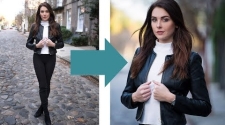
Patrick Hall of Fstoppers photographs Kirsten on busy Charleston streets with a Tamron 70-200mm f/2.8, showing how focal length controls backgrounds. A 35mm at f/1.8 includes a fire hydrant and blown highlights; stepping back to 70mm then 200mm excludes them, and three feet into sun at 1/800 changes the mood.

My Three Favourite Prime Lenses and How to Use Them for Portraiture

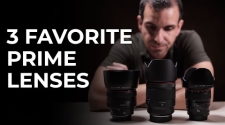
Pye Jirsa of SLR Lounge recommends primes after the 24-70 and 70-200, choosing either a 24mm or 35mm depending on other lenses owned, then a 50mm and 85mm. Portraits at 1/200, f/1.4 and ISO 50 show wide primes' depth and separation, while the 50mm needs fifteen feet of room.

7 Ways a 70-200mm Lens Will Improve Your Photography

Nigel Danson argues a telephoto, such as his 70-200mm, is the easiest route to stronger landscape composition. Shots from Rydal Water, the Faroes and San Francisco show how zooming to 150mm simplifies busy scenes, isolates mountain layers, adds scale via distant figures and leaves misty islands to the imagination.

Lindsay Adler: Favourite Fashion Lens

Lindsay Adler grabs the Canon RF 24-105mm f/4 on an EOS R5 for three quarters of her fashion work: studio shoots at f/8 or f/11 with moving subjects leave fast primes little advantage, while the zoom covers full-length, three-quarter and tight crops. She demonstrates a one-light comp card setup.

Why You Should Use a Long Lens in the Studio

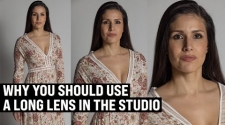
Mark Wallace, with model Teresa, gives three reasons for long studio lenses: comfort, compression and composition. A 16mm headshot puts him almost on her nose, distorting her face and revealing the whole set, whereas a 70-200mm f/2.8 at 200mm from eight feet gives natural proportions and quick wide-to-tight framing.