Interviews

Interview | texfash
Brands Set Decarbonisation Targets and Expect Suppliers to Absorb the Cost

Brands Set Decarbonisation Targets and Expect Suppliers to Absorb the Cost

15 June 2026

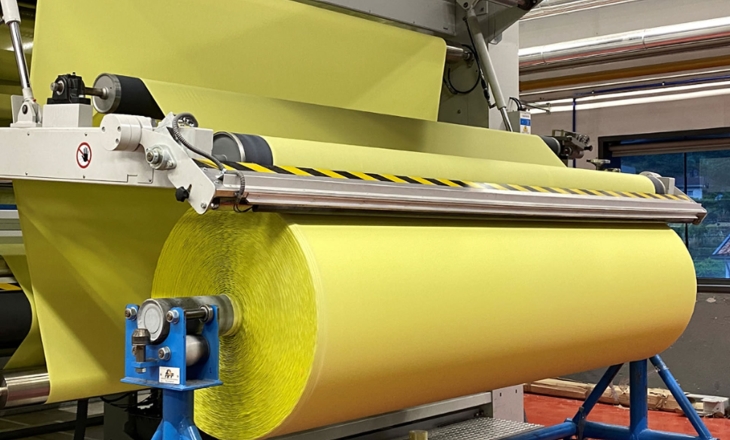
The textile industry has spent years producing pilot-scale sustainability successes that rarely translate into supply chain-wide adoption. The constraint is purchasing behaviour, not available technology. Eva Baumann, Chief Executive Officer of CHT Group, draws on CHT's foundation-owned structure and portfolio depth to make a case that is less about ambition than about where industrial reality and procurement logic continue to diverge.

MORE
Interview | texfash
Physical Fairs Still Matter When Trust Becomes the Scarcer Commodity

Physical Fairs Still Matter When Trust Becomes the Scarcer Commodity

4 June 2026

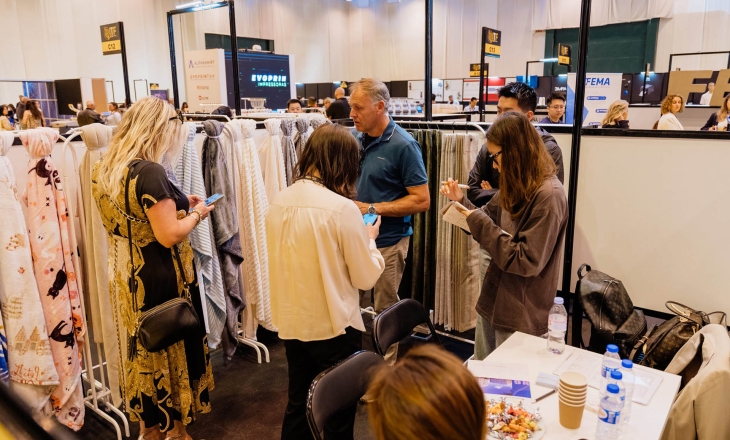
Europe’s textile fair circuit is crowded, and buyers are weighing travel, time and sourcing returns more carefully as sourcing budgets face sharper scrutiny. For Serhan Pul, Managing Director of B Group US and organiser of Intertex Portugal, the answer lies in efficiency, relevance, buyer qualification and Portugal’s manufacturing strengths rather than scale alone today.

MORE
Interview | texfash
Inclusion or Concentration: Latin American Cotton Faces a Reckoning

Inclusion or Concentration: Latin American Cotton Faces a Reckoning

26 May 2026

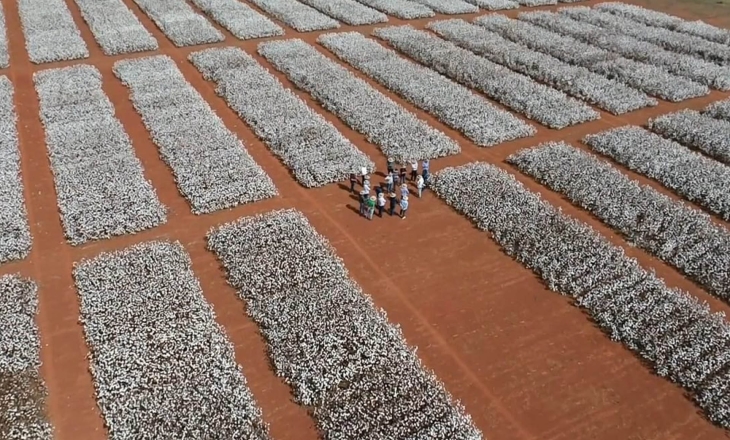
Across Latin America, cotton sectors are navigating a modernisation wave that is producing sharply unequal results. The technologies exist; so does the research capacity. What remains fragile is the institutional scaffolding that translates both into farm-level change. Dr Marcelo Paytas, Director at INTA – Instituto Nacional de Tecnología Agropecuaria, has spent years working at that fault line, and his diagnosis is precise.

MORE
Interview | texfash
Latin America's Cotton Diversity Is an Asset Nobody Has Unlocked Yet

Latin America's Cotton Diversity Is an Asset Nobody Has Unlocked Yet

19 May 2026

Latin American cotton operates across a wide spectrum, yet rarely as a coherent regional bloc. Argentina exemplifies this tension: a significant cotton producer whose structural fragmentation mirrors the wider regional condition. José Luis Spontón, researcher at INTA's Reconquista Experimental Research Station (EEA Reconquista), examines what is holding the sector back and what associative models from Brazil and Paraguay suggest about the path forward.

MORE
Interview | texfash
Brazil Cotton: Traceability Promises Are Running Ahead of What Most Farmers Can Actually Deliver

Brazil Cotton: Traceability Promises Are Running Ahead of What Most Farmers Can Actually Deliver

18 May 2026

The pressures reshaping cotton cultivation across Latin America are real, but they do not fall evenly. Scale, technology access and market proximity determine which producers absorb disruption and which do not. Nelson Dias Suassuna, senior researcher at Embrapa, draws a clear line between the sector's two operating realities and the distinct futures each one faces.

MORE
Interview | texfash
The Next Yarn Economy Will Reward Evidence, Partnership and Discipline

The Next Yarn Economy Will Reward Evidence, Partnership and Discipline

4 May 2026

Yarn suppliers are being pulled into earlier, more technical conversations as fashion, sportswear and advanced textiles demand stronger proof of performance, traceability and end-use value. Nicola Carletti, Marketing Manager at MIC S.p.A., explains how the Italian sewing thread specialist is widening its material base without abandoning industrial discipline, from Himalayan nettle to wearable robotics projects.

MORE
Interview | texfash
Fashion Influence Is Moving Beyond the Capitals That Once Controlled It

Fashion Influence Is Moving Beyond the Capitals That Once Controlled It

23 April 2026

Global fashion visibility still favours money, geography and entrenched networks, leaving many designers outside the main circuit. Olga IF, Founder, Modavision, argues that fashion needs more open systems of representation, participation and access. Her platform combines national identity, public voting and cultural exchange in one international format, while questioning how legitimacy is still allocated across the industry.

MORE
Interview | texfash
Polycotton Recycling Faces a Scale Test That Chemistry Alone Cannot Solve

Polycotton Recycling Faces a Scale Test That Chemistry Alone Cannot Solve

21 April 2026

Blended textile waste is no longer being discussed as a marginal recycling problem but as an industrial systems challenge shaped by regulation, cost and infrastructure. In that debate, Peter Mangnus, Business Director Dawn Technology at Avantium, argues that progress will depend less on scientific novelty alone than on aligning feedstock, offtake, finance and policy support.

MORE
Interview | texfash
Sustainability and Functionality Now Share the Same Commercial Test for Fabrics

Sustainability and Functionality Now Share the Same Commercial Test for Fabrics

20 April 2026

Global textile trade is moving through a more complex sourcing cycle, with buyers weighing cost, reliability, material performance, and sustainability together. Wilmet Shea, General Manager, Messe Frankfurt (HK), discusses how Intertextile Shanghai Apparel Fabrics reflected those pressures, from Southeast Asian buyer flows and China’s upstream strength to AI-led workflows, traceability platforms, eco-performance fabrics, and knowledge programming.

MORE
Interview | texfash
The Future of Fashion Waste Hinges on Scaling Solutions for Blended Materials

The Future of Fashion Waste Hinges on Scaling Solutions for Blended Materials

24 March 2026

Blended textiles have long resisted viable recycling pathways, limiting circularity ambitions across the apparel sector. Toby Moss Chief Commercial Officer of Worn Again Technologies discusses how an operational accelerator plant marks a transition from controlled experimentation to industrial validation, while exposing the economic, material, and system-level challenges that must be resolved for textile-to-fibre recycling to scale.

MORE