Videos

How to Control the Light on Your Backdrop

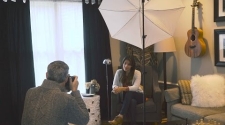
David Strauss of Fstoppers photographs Matt Hyatt against a Rough Lux backdrop to show how the inverse square law governs backdrop exposure. With a seven-foot octabox he varies subject-to-light and subject-to-backdrop distances for brighter or darker backgrounds, then adds a bare strobe behind the subject, dropping it two stops.

How to Shoot Black Backgrounds Without a Backdrop: Macro and Product Photography

Ben from Adaptalux photographs a figurine before bookcases to show black backgrounds come from settings and lighting, not backdrops. From ISO 500, f/5.6 and 1/60, he underexposes until the histogram reads black, then sets white arms as key and underlight, diffuses one, and adds a red arm for atmosphere.

How to Create a Black Photography Background in Any Location

Glyn Dewis shows his invisible black background technique, making any location look like a studio black backdrop. He sets 1/200 sync speed, ISO 100 and f/8, stopping down to f/11 until a test frame is black, then adds an FJ400 in a Rapid Box Switch Octa to light Robert.

How to Get a Black Background, Even With a White Wall

Andrew Boey turns a white wall black by setting ISO 200, 1/200 and f/16 so ambient goes black, then lights Demi with a bare flash two feet away at 1/8 power. A shoot-through umbrella spills onto the wall, so he uses a reversed umbrella set high, adding two stops.

How to Use a Black Background for Any Type of Photography

Karl Taylor covers black backgrounds: velvet absorbs light best, matte-painted MDF boards suit products if the subject is further away, and paper is often too reflective. Distance avoids spill, and three methods give separation: rim lighting, a gelled background glow and lighting the subject properly to avoid floating heads.

White Background Photography: Tips, Kit and Lighting Setups

Karl Taylor explains white backgrounds for product and e-commerce shots without flaring subjects: use a white wall or matte or gloss acrylic, leave distance between subject, background and lights, and prefer two lights for even coverage. He dismisses light cubes and details three setups, including one hidden background light.

Photographic Backdrops and How to Make Your Own

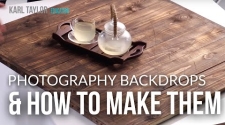
Karl Taylor compares backdrops, paper rolls cheap but creasing and warping without a core rod, canvas and muslin, MDF boards, pop-ups and infinity coves, then explains choosing colour, texture and size so background supports rather than competes with the subject, and outlines two DIY backgrounds including a hand-painted canvas.

Four Looks, One Grey Background

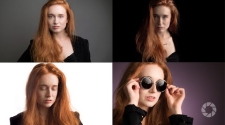
Gavin Hoey picks grey as the one backdrop for a small studio, shooting Beth with a gridded StreakLight softbox at f/4: with Beth close to the light the inverse square law turns it black, a separate light makes it white, and red and blue gels turn it purple.

Single Flash Portraits on a Budget

Tony Northrup photographs Chelsea with off-brand speedlight, stand and umbrella under 80 dollars, bare for hard shadows, then through shoot-through and bounce umbrellas held close for softness. He sets manual, 1/200, widest aperture and ISO 100 so ambient goes black, firing the flash as an optical slave from the pop-up.

Shooting Portraits with One Speedlight

Sean Tucker argues strobe portraiture need not be expensive or intimidating, showing budget kit he uses for a classical one-light look. On a Sony A7 III at ISO 100 and f/2.8, camera and flash in manual, he moves the light from split to Rembrandt to beauty patterns, exposing by eye.