Videos

Tamron 70-300mm f/4.5-6.3 Review: Solid Performer but Missing One Thing

Bobby Tonelli reviews the Tamron 70-300mm f/4.5-6.3 Di III RXD, the lightest telephoto zoom for Sony E-mount at 545 grams: weather resistant, 67mm filter thread, autofocus on a par with Sony's lenses and an aperture reaching f/6.3 by 250mm. Singapore samples show sharp centres with slight edge softness at 300mm.

Tamron SP 70-300mm f/4-5.6 Di VC USD Review: Best Budget Telephoto?

Cassian of TechniCas decodes the name of the Tamron SP 70-300mm f/4-5.6 Di VC USD, then covers specifications, build, image and video quality and autofocus speed. Samples stay sharp into the corners at 300mm without chromatic aberration, and he judges the 800-gram, 350-dollar lens still worthwhile a decade after release.

Tamron 70-300mm f/4-5.6 LD Di Macro Lens Review (with Samples)

Christopher Frost reviews the Tamron 70-300mm f/4-5.6 LD Di Macro, the cheapest telephoto on sale: plastic mount, stiff zoom ring, slow whining autofocus and a rotating front element, but a 1:2 macro mode locked between 180mm and 300mm. Images are soft wide open, decent at f/8, with persistent purple fringing.

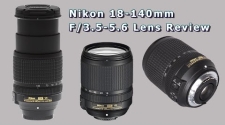
Nikon 18-140mm AF-S f/3.5-5.6G ED VR DX In-Depth Review

Mohamadreza Baghayi unboxes the Nikon 18-140mm f/3.5-5.6G ED VR DX and details its specifications on a D7200: 487 grams, 67mm filter thread, HB-32 hood, metal mount with rubber gasket, seven aperture blades, internal focusing with external zoom, apertures from f/3.5 to a minimum f/36, then tests focusing speed and noise.

Nikon 18-140mm f/3.5-5.6 VR DX: Best Zoom Lens for Travel?

DigitalRev TV tests the Nikon 18-140mm f/3.5-5.6 VR as a one-lens travel option while riding Hong Kong buses: build is a step up from the 18-55mm kit lens, autofocus is quiet, distortion is noticeable at both ends, fringing is well controlled, bokeh is average and it is not weather sealed.

Nikon 18-140mm DX VR: The Perfect Travel Lens

Charles of Charles N Photography shares photos from a family trip through the Scenic Rim, Tenterfield's autumn maples and an old railway bridge, all shot handheld on the Nikon 18-140mm between 18mm and 105mm, mostly in aperture priority, arguing that lens quality matters more than the camera body behind it.

Nikon 18-140mm f/3.5-5.6 Lens Review

Charles of Charles N Photography argues the Nikon 18-140mm suits landscape work on a D500: shoot between f/5.6 and f/11, stop to f/8 at 140mm for corner-to-corner sharpness, use ND filters rather than f/22 to slow exposures, switch off VR on a tripod and fit a cheap hood.

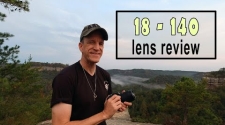
Nikon 18-140mm Lens Review and Camping Adventure

Mark from RealWorld tests a Nikon 18-140mm zoom on his D3400 during a two-night backcountry trip around Kentucky's Red River Gorge, expecting less distortion than the 18-200mm or 18-300mm. Shooting raw in aperture priority, with a variable ND for waterfalls, he unpacks his Teton Explorer 4000 pack and tent.

Why You Should Use a Long Lens in the Studio

Mark Wallace, with model Teresa, gives three reasons for long studio lenses: comfort, compression and composition. A 16mm headshot puts him almost on her nose, distorting her face and revealing the whole set, whereas a 70-200mm f/2.8 at 200mm from eight feet gives natural proportions and quick wide-to-tight framing.

How to Control Your Background with a 70-200mm Telephoto Lens

Patrick Hall of Fstoppers photographs Kirsten on busy Charleston streets with a Tamron 70-200mm f/2.8, showing how focal length controls backgrounds. A 35mm at f/1.8 includes a fire hydrant and blown highlights; stepping back to 70mm then 200mm excludes them, and three feet into sun at 1/800 changes the mood.