Videos

Stop Buying Bad Gear

Tony and Chelsea Northrup recount gear-buying mistakes, starting with an eBay Nikon 70-200mm f/2.8 that proved grey market, so Nikon refused warranty repairs. They advise reputable dealers, checking warranty cover, avoiding flaky adapters and off-brand batteries, and not paying for frame rates or 4K that still life never needs.

Photography Gear You Shouldn't Buy

James Popsys talks beginners out of accessories he is often asked about: filters, especially graduated ones whose effect Lightroom replicates free, drones, expensive carbon-fibre tripods bought before knowing they will be used, Gnarbox and SSDs, cleaning kits, monitor calibrators, Loupedeck controllers and L brackets, invoking diminishing returns.

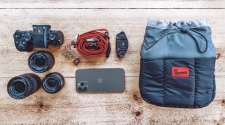
Stuff Beginner Photographers Actually Need

James Popsys lists kit worth buying when starting out: a camera covering several focal lengths, not necessarily interchangeable-lens, a standard prime like a nifty fifty (25mm on Micro Four Thirds), an affordable telephoto rather than the priciest option, and a cheap, accessible bag so the camera gets used.

When Should You Upgrade Your Camera?

Andrew Boey, who has taught photography for more than twenty years, discusses when a photographer should upgrade a camera body. The seventeen-minute Beyond Photography talk evidently weighs the arguments for and against replacing working equipment, the kind of practical gear-buying question he returns to across his tutorials and courses.

Crop Factor Truth: Do You Need Full Frame?

Tony Northrup photographs his father with a 50mm f/1.8 on full frame, APS-C and Micro Four Thirds bodies, showing smaller sensors crop the view but not exposure. He multiplies focal length and aperture by crop factor (1.5, 1.6 or 2) for full-frame equivalents, arguing equivalent lenses are similar sizes.

What Camera Should You Buy: DSLR, Mirrorless, Medium Format, Full Frame or Crop Sensor?

Karl Taylor sets out what to weigh before buying a camera: define purpose, since landscape work values tonal range over frame rate. He compares full frame, APS-C and medium format sensors, explains why larger photosites beat cramped smartphone pixels, stresses lens quality over megapixels, and contrasts DSLRs with mirrorless.

DSLR Tutorial: How to Make a Timelapse

Fenchel & Janisch explain two DSLR timelapse methods. The quick method records video manually at 1/30 to 1/50 shutter and f/4 to f/8 for five-plus minutes, then speeds it up. The professional method shoots stills with an intervalometer, allowing 50-second exposures at f/8, ISO 100, for night motion blur.

Easy Macro Photography

Andrew Boey shoots close-ups of potted plants during lockdown with a tripod, stool, LED light and close-up filters on a 50mm lens. He angles black card away from the light for solid blacks, drops ISO to 400, picks f/8 for depth and underexposes a stop for a low-key look.

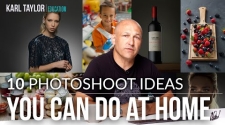
10 Photoshoot Ideas That Are Easy to Try at Home

Karl Taylor suggests ten shoots to practise indoors: window-lit natural light portraits, photographing children with toys as props, a one-light setup simulating sunlight, single-light rim lighting, natural light food, still life, one-light product photography with reflectors and flags, a bottle shot using daylight and a phone torch, and splash photography.

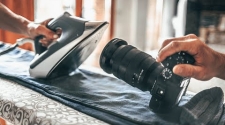
10 Photography Ideas at Home

Jordi Koalitic presents ten creative photography ideas to shoot at home during quarantine. Without narration, the four-minute piece evidently shows each setup and its resulting image in quick succession, using everyday household objects and simple tricks, with the gear listed as a Sony A7R III and 16-35mm lens.