Videos

Street Photography Guided by Your Feelings: Tips Street Photographers Should Know

Kenneth Hines Jr, a Zeiss ambassador, presents a B&H webinar setting technique aside to discuss how emotion shapes street photography, gear and subjects. Showing unpublished images, from a Times Square corner on a 25mm to frames shot mid-stride on a Sony a9, he explains pre-visualising pictures and choosing subjects.

Hitting the Pavement: Street Photography

Derek Fahsbender, a New York street and portrait photographer with fashion roots, delivers a B&H class on seeing the city differently. He covers preparation, approach and camera settings, then discusses favourite images from across New York: candid moments, street portraits, reading light and how tight crops shift attention to faces.

The Evolution of a Street Photographer with Dotan Saguy

Dotan Saguy, in a Leica-sponsored B&H talk, recounts the year after leaving technology to shoot full-time without needing it to pay. He traces his path from hobbyist through photojournalism, documentary and travel work to publication, sharing lessons and the story of Louis, a former dancer in crumbling Havana.

Street Photography Masterclass with Nick Turpin

Nick Turpin, thirty years a London photographer, defines street photography as candid, unstaged observation anywhere the public gather. He calls the camera a space-time editing tool, addresses nervousness about photographing strangers, shows projects On the Night Bus and Autos, and collects sets of three pictures from Piccadilly Circus.

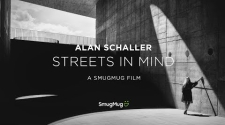
Alan Schaller: Streets in Mind

Alan Schaller reflects on street photography in a SmugMug film, describing cities as an overwhelming conveyor belt of subjects he tames by limiting himself to one focal length or location. A former film composer, he explains how narrative drives his work and how he conveys mood through environment, not faces.

7 Tips for Black and White Street Photography with Alan Schaller

Alan Schaller offers seven black and white street tips: shoot mono deliberately for a month, seek texture, tonality, contrast and light over colour, accept the available light, use geometry and reflections, cover the full tonal range per Ansel Adams' zone system, shoot from unusual heights, and treat editing as varnish.

Lessons from Fan Ho for Street Photographers

Ribsy draws four lessons from Fan Ho's 1950s Hong Kong photographs: shoot in harsh late-afternoon sun raking through doorways and stairwells at about 45 degrees, chase the shadows it casts and wait for a figure to complete them, look for repeating lines and patterns, and treat composition as artistry.

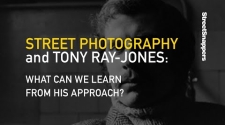
Tony Ray-Jones' Approach to Street Photography

Brian Lloyd Duckett works through the thirteen-point notebook manifesto that Tony Ray-Jones wrote for himself in the late 1960s, from be more aggressive and talk to people to think more about composition and don't take boring pictures, interpreting each note for street photographers alongside Ray-Jones' images of English customs.

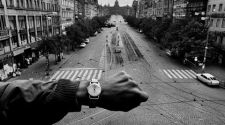
Josef Koudelka

Ted Forbes profiles Josef Koudelka, prompted by a Getty retrospective. He traces Koudelka's switch from aeronautical engineering to photography at thirty, the seven days photographing the 1968 Warsaw Pact invasion of Prague, published anonymously as PP and awarded the Robert Capa Gold Medal, and the theatre and Gypsies work.

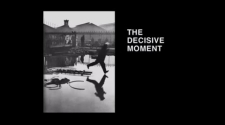
Henri Cartier-Bresson: The Decisive Moment

Henri Cartier-Bresson speaks in an archive interview about photography as an immediate, uncorrectable sketch drawn by intuition. He recalls Robert Capa warning him off the surrealist label, dismisses mere documentation, describes the geometry and millimetre-precise relations of shapes that give him pleasure, and insists on acting quickly like an animal.