Videos

10 Street Photographers Every Photographer Must Know

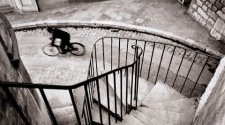
Ted Forbes counts down ten street photographers who influence him, from Charles Nègre's 1852 chimney sweeps, made on emulsion of roughly ISO 6, and Henri Cartier-Bresson to the New York school of the 1950s and 60s, including Ted Croner's blurred night scenes and Louis Faurer, alongside Saul Leiter.

What a Grey Day: Top Tips for Street Pictures When the Sun Doesn't Shine

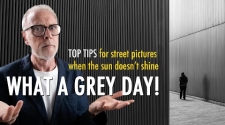
Rupert Vandervell tackles grey-sky days with five approaches: think in black and white and build images around white, mid-grey and black tones; borrow mood from Alexey Titarenko's slow-shutter blur; shoot from dark underpasses towards the light; let mist hide backgrounds; and exploit the subtler reflections of dull conditions.

How to Do High-Contrast Street Photography the Right Way

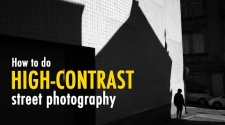
Rupert Vandervell dissects several of his high-contrast black and white street pictures, many from a week in Porto, explaining the light, timing and framing behind each. He favours quiet back streets around 4pm as shadows lengthen, checks frame edges, treats buildings as dark shapes and waits for one animated figure.

Creating Mood and Mystery in Your Street Photography with Joshua K Jackson

Sean Tucker walks Soho with Joshua K Jackson, whose street work pairs rich, saturated reds with subjects that are rarely shown clearly. Jackson explains his form-driven idea of the curiosity gap, masking people with shadow, reflections and double exposures so viewers linger, likening it to a storyteller's slow punchline.

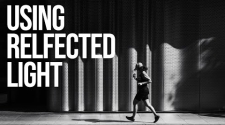
Using Reflected Light in Street Photography (Good Light Series)

Sean Tucker hunts for sunlight bouncing off London's glass and steel, waiting beside a perforated metal wall for passers-by to cross pools of reflected light. He shoots a Fuji X-T20 and 23mm f/2 at 1/2000, f/2.8, ISO 200, then crops in Darkroom and dodges and burns in Snapseed.

A Lesson in Light for Street Photography

Roman Fox argues light, not aperture, makes photographs three-dimensional: a subject at f/1.2 in flat light merges into the background since cameras cannot see depth. He recommends backlight or side light at 45 to 90 degrees for natural contrast and separation so strong he often lowers contrast in Lightroom.

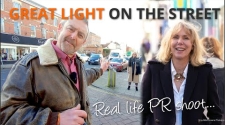
Great Light on the Street

Mike Browne photographs author Alex Massey on a busy high street for PR images with a 55-200mm zoom, finding flattering light: leaving harsh sun for open shade and shadowless faces, isolating her against passers-by, shifting position to lose drainpipes behind her head, and shooting at 1/250 with raised ISO.

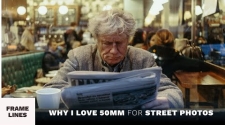
Why I Love 50mm for Street Photography, and a Look at Elliott Erwitt's New Book

Shane Taylor reviews Elliott Erwitt's Found, Not Lost, 171 unpublished images the 92-year-old selected from a 600,000-image archive, then explains why he favours 50mm for his sombre street work: a perspective close to human vision, putting viewers in his shoes, and a working distance respecting four feet of personal space.

Street Photography Tutorial: Zone Focusing

David Coleman teaches zone focusing for decisive street moments: f/11 in aperture priority with a 21 to 35mm lens, 1/125 minimum shutter and auto ISO. He sets the zone via the lens's depth-of-field scale, the 35, 6, 11 rule, four to twelve feet sharp, or zone-focusing tables and PhotoPills.

The Best Camera Settings for Street Photography

Frederik Trovatten configures his Fujifilm X-T3 for set-and-forget street shooting: auto ISO with a 1/250 minimum shutter and a 1600 ceiling, leaving aperture as the one dial he adjusts for depth of field. He suggests guessing Flickr photos' settings as practice, and metering for the bright side to keep highlights.